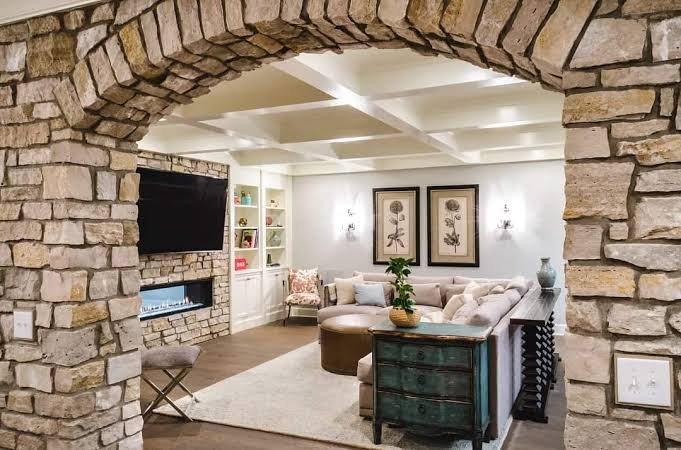
Most basements I’ve seen in Indian homes end up as a graveyard for things nobody wants to throw away — an old sofa, broken suitcases, maybe a cricket bat from 2011. If that sounds like your basement, you’re sitting on more usable space than you think.
Basement renovation ideas don’t have to mean a full Western-style “finished basement” complete with a home theater and a wet bar (though sure, if your budget allows, why not). For most Indian homeowners — especially in older bungalows, farmhouses, or independent houses with a proper basement level — it’s about converting dead storage space into something that earns its keep.
I helped a relative rework her basement in Gurugram last year, and the transformation genuinely surprised both of us. Let’s get into what actually works.
Why Renovate Your Basement in the First Place
A finished basement typically adds 15-25% more usable floor area to a home without expanding its footprint — which matters a lot in cities where land costs make horizontal expansion nearly impossible. It’s one of the few renovation projects that adds real square footage rather than just refreshing what’s already there.
There’s a financial angle too, and I don’t think enough people talk about it. A converted basement — say, a rental unit or a home office — can genuinely increase your property’s resale value, sometimes more than a kitchen remodel would. Basements in India tend to get overlooked in this conversation because so many people assume “basement” automatically means “parking” or “storage” and stop thinking beyond that.
Dealing With Moisture and Waterproofing First
Direct answer: Before any basement renovation, waterproofing has to come first — Indian basements, especially in monsoon-heavy regions, are prone to seepage, and skipping this step means any flooring or furniture you install later risks damage within a single rainy season.
I can’t stress this enough, and I say that as someone who learned it the hard way. My cousin skipped the waterproofing step to save money on his basement conversion in Pune, painted and floored the whole thing beautifully, and by August the walls had visible damp patches creeping up from the base. He redid the whole floor within a year. Don’t be my cousin.
What proper waterproofing actually involves:
- Crystalline waterproofing coating on walls and floor, especially where the basement meets the foundation
- A functioning drainage system around the exterior, checked and cleared before monsoon each year
- Sump pump installation if your basement is prone to water table rise (common in low-lying areas)
- Sealing any visible cracks with polyurethane injection, not just surface-level filler
Budget roughly ₹80-150 per square foot for professional waterproofing, depending on the severity of existing damage and your city. It’s not the exciting part of the renovation, I know. But it’s the part that decides whether everything else you do actually lasts.
Adding Proper Lighting and Ventilation
Basements are naturally dim, and that’s the single biggest thing standing between a basement and a room people actually want to spend time in. Has anyone ever walked into your basement and immediately felt the need to leave? That’s usually a lighting problem, not a space problem.
Layer your lighting rather than relying on one central tube light:
Related guidance: How Long Does a Home Renovation Timeline Really Take?
- Recessed ceiling lights for general illumination — spaced roughly every 6-8 feet
- Wall-mounted sconces or floor lamps for softer, ambient lighting in seating areas
- Task lighting wherever you’re placing a desk, reading nook, or workbench
For ventilation, exhaust fans are the bare minimum, but if your basement has any external wall access, even a small window well with a light shaft makes an enormous difference — both for airflow and for making the space feel less like, well, a basement.
Turning It Into a Home Office or Study Room
Picture a small business owner in Jaipur running her export handicrafts business from home — she’d been working from a corner of her bedroom for years, laptop balanced on a cushion, client calls interrupted by household noise. Converting even 150 square feet of her basement into a proper office changed her whole workday.
Basement renovation ideas aimed at home offices don’t need to be elaborate. A desk, good lighting, decent internet cabling, and some soundproofing (even just a thick rug and heavy curtains) go a long way. Basements tend to be quieter than upper floors too, which is honestly underrated for anyone doing calls all day.
Keep the color palette light — basements already fight against feeling closed-in, and dark walls make that worse. Off-white, pale grey, or a soft sage green all work well.
[link to related guide about setting up a productive home office here]
Building a Home Theater or Entertainment Room
This is probably the most popular basement conversion internationally, and it’s catching on in India too, especially among homeowners with independent houses and a bit more renovation budget to work with.
A basic setup includes:
- A projector and pull-down screen (often cheaper than a large flat-screen TV for the same viewing size)
- Acoustic panels on at least two walls to control echo, which basements are notoriously bad about
- Comfortable seating — recliners if the budget allows, floor seating and bean bags if it doesn’t
- Blackout curtains or blinds if there’s any natural light source
A mid-range home theater basement setup in India typically runs ₹1,50,000-4,00,000 depending on how much of the AV equipment you’re buying new versus repurposing. It’s not a cheap project, I won’t pretend otherwise. But for families that actually use it regularly, it earns its cost back in a way a lot of “showpiece” renovations don’t.
Creating a Rental Unit or Guest Suite
Direct answer: Converting a basement into a self-contained rental unit — with its own entrance, small kitchenette, and bathroom — can generate real monthly income, and in cities like Bangalore or Pune, a well-finished basement studio can rent for ₹8,000-18,000 depending on location and size.
This is probably the most ambitious item on this list, and it needs proper permissions — check your local municipal corporation’s rules before committing, because basement rental regulations vary quite a bit by city and sometimes by specific residential zone. Skipping this step can cause real headaches later.
If it’s feasible where you live, though, it’s genuinely one of the better returns on a home renovation. You’re not just adding living space, you’re adding a small income stream, and separate basement entrances are common enough in older Indian house designs that the structural changes needed are often smaller than people expect.
[link to related guide about converting extra space into rental income here]
Setting Up a Home Gym
Basements suit home gyms better than almost any other room in the house — sturdy concrete flooring, no worry about vibration disturbing anyone below, and enough separation from living areas that you’re not tripping over a treadmill on your way to the kitchen.
Flooring matters more here than people expect. Rubber gym flooring tiles cost around ₹80-150 per square foot and protect both the concrete underneath and whatever equipment you’re dropping on it. Skip the carpet — I made that mistake once and regretted it within a month of dumbbells wearing bald patches into it.
Mirrors along one wall, a decent exhaust fan (gyms get humid fast), and enough ceiling height for anything overhead like pull-up bars round out the basics.
Adding a Playroom or Kids’ Activity Space
If you’ve got children and an unused basement, this combination practically solves itself. Basements give kids a space to be loud, messy, and creative without turning the main living areas of the house upside down every single afternoon.
A few practical touches make a real difference:
- Soft flooring — foam mats or thick carpet tiles, both easy to clean and forgiving for falls
- Open storage bins rather than closed cabinets, since kids are far more likely to actually put things away if it’s a simple toss-in system
- Good, even lighting — dim corners in a kids’ space just aren’t worth the trade-off
I’ll admit a personal bias here: I think playrooms are one of the most underrated basement conversions, mainly because the payoff isn’t financial, it’s just… peace, most evenings. That’s worth something too.
FAQ: Your Basement Renovation Questions Answered
How much does a basic basement renovation cost in India? It varies widely depending on scope, but a basic conversion — waterproofing, flooring, lighting, and paint — usually falls between ₹300-600 per square foot. Elaborate additions like a home theater or rental kitchenette push that considerably higher.
Is basement waterproofing really necessary, or can I skip it if the space looks dry? Skip it at your own risk. Basements can look dry for years and still have moisture creeping in slowly through the foundation, especially before monsoon season fully tests the walls. It’s far cheaper to waterproof upfront than to redo flooring and furniture after water damage.
Do I need municipal permission for a basement renovation? For cosmetic changes like flooring, paint, and lighting — usually not. For structural changes, adding a bathroom, kitchenette, or separate entrance for rental purposes, yes, you’ll need to check with your local municipal corporation, since rules genuinely differ by city.
How long does a typical basement renovation take? A basic conversion (waterproofing, flooring, lighting) usually takes 3-5 weeks. More involved projects — home theaters, rental units with plumbing — can stretch to 2-3 months depending on how much structural and electrical work is involved.
Can a basement in an Indian home actually be converted into a livable room? Yes, provided ventilation and waterproofing are handled properly first. Plenty of older bungalows and independent houses have basements that were originally built for storage or parking but have enough ceiling height and structural soundness to become genuinely livable rooms.
What’s the biggest mistake people make with basement renovations? Rushing straight to the fun part — flooring, furniture, paint — without addressing waterproofing and ventilation first. It’s tempting, but it almost always ends up costing more to fix later than it would have to do right from the start.
Final Thoughts
A basement sitting empty, or worse, half-full of things nobody’s touched in years, is one of the more overlooked opportunities in Indian home renovation. Whether it becomes a home office, a rental unit, or just a proper playroom for the kids, the space is already there — you’re just finally putting it to use.
Start with waterproofing, always. Everything else on this list depends on getting that part right first. Once that’s sorted, pick whichever conversion actually fits how your household lives, not just whichever one looks best in photos.
If you’ve been putting off a look at your basement’s condition, this is as good a nudge as any to go check on it this weekend.